
· by Michael Blair, Nashville's Cabinets
Cabinet doors that look tired around the handles and above the range usually have two things wrong with them. One is ordinary use: Decor Cabinet Company’s general care guide puts the wear around knobs and pulls down to oils from skin, food and hand lotion, and warns that rubbing at those spots on a low-sheen finish only polishes them further. Hands are unavoidable. The cleaner is a choice, and the same guide says the wrong one can damage a finish beyond repair.
What actually damages a cabinet finish
Start with what is in the bottle. Decor’s guide rules out anything containing silicone, wax, polish, abrasives, acids, strong alkalis, solvents, alcohol, ammonia or bleach, for stained, painted and conversion-varnish doors alike, and it says oven cleaner should never touch the finish. Before a glass cleaner or a multi-surface spray goes on a cabinet, read its label for those words. Silicone and wax do their harm slowly. The guide says silicone seeps into a finish and leaves it unable to take new stain or finish, which rules out a touch-up or a later refinishing job, and that wax builds up a film that attracts grease and makes repair difficult.
Then abrasives. A magic-eraser pad is melamine foam, and BASF’s page for Basotect, its melamine foam, says the material is used as a household cleaning eraser because it is slightly abrasive and works like a soft sandpaper. That is how it lifts a scuff with no cleaner on it. Decor lists magic erasers next to scouring pads, sponges and steel wool as things never to use, and warns that scrubbing in one place polishes the finish into a shinier patch, which shows most on low-sheen doors. Scouring powder and the green side of a kitchen sponge are abrasives too.
What is the safest everyday way to clean cabinets?
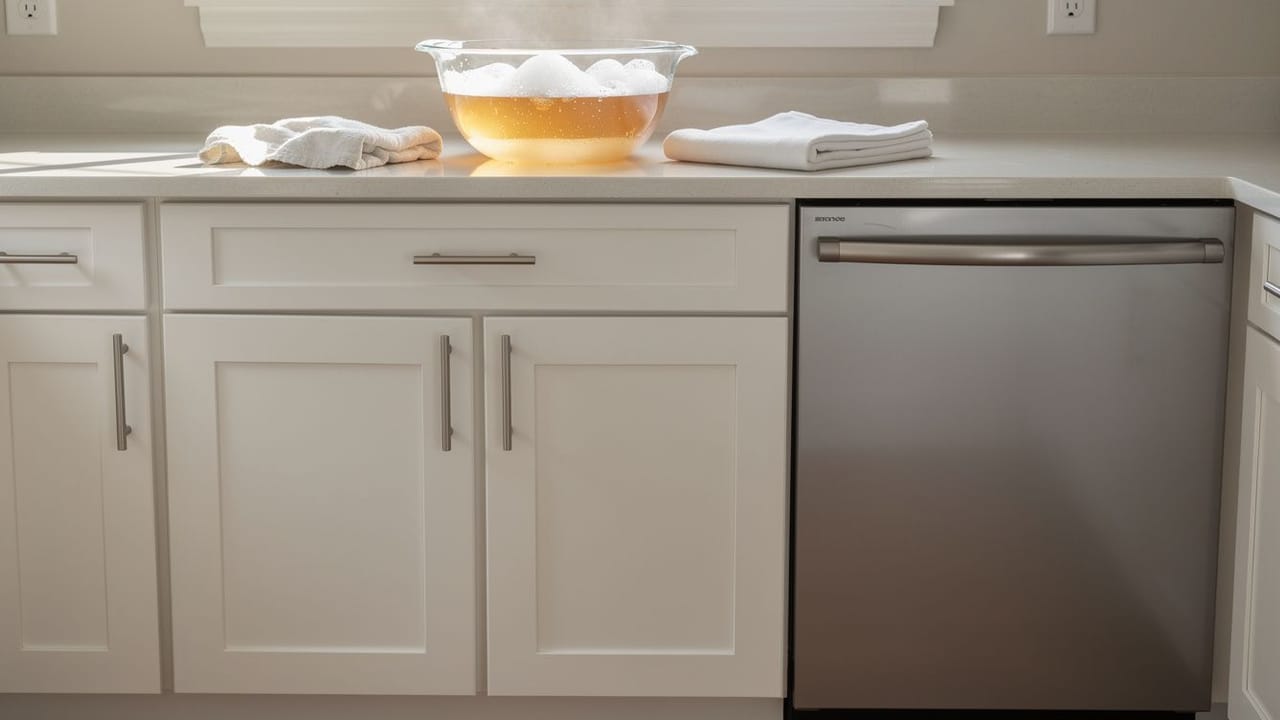
Warm water with a few drops of dish soap, the kind for washing dishes by hand and not dishwasher detergent, on a clean white cloth wrung out until it is damp rather than dripping. Then a second cloth to dry it straight away. That is the method Decor recommends above everything else for its cabinets, and it names smoke, cooking residue, grease and hand oils among what it takes off. Keep the sink dishcloth for the dishes, since the guide warns it can carry harsh soap and grease onto the finish. Care instructions do differ from one maker to the next, so if you know who built your cabinets, read theirs first.
The important part is the second cloth. Decor tells owners to dry spills completely, especially near the sink, stove and dishwasher, on joints and around cutouts, and never to drape a damp towel over a door. The reason is what sits under the paint on a lot of cabinets. The Forest Service’s Wood Handbook chapter on wood-based composites explains that particleboard and MDF are mostly bonded with urea-formaldehyde resin, kept to interior use because moisture breaks that bond down, and that unlike plywood, most particle panels swell for good once they get wet. Water left along the bottom edge of a door above the dishwasher works its way into the joint, which is why drying straight away is one of the habits that matters most.
- Mild dish soap and warm water, then dry immediately
- No ammonia, bleach or solvent-based cleaners
- No silicone or wax polishes
- No melamine pads or abrasive sponges
- Never let water stand along the bottom edge of a door
- Wipe grease off promptly rather than letting it build up
Grease that has been there a while
Grease that has sat on the doors above a range for months is the slowest dirt in a kitchen to come off, and it is where people reach for a degreaser. Read the label first. If it names a solvent, ammonia, an acid or a strong alkali, it is on Decor’s never-use list, whatever the front of the bottle says about kitchens. The guide’s other advice is to clean routinely, so grease and oil never get the chance to build up.
For grease that is already there, Decor’s answer is the same soap and water done with more patience. Put a squirt of dish soap straight onto the cloth under warm running water and rub the spot gently, then wipe it with a clean damp cloth and dry it, and repeat as many times as it takes. The guide also allows a half-and-half mix of distilled white vinegar and warm water on some finishes, though not on melamine, UV lacquer, acrylic or laminate. Test anything new on the inside of a door first, and resist scrubbing one spot hard, which is how the shiny patches start.
What damages the cabinets around a dishwasher?
Around the dishwasher, steam does the damage that standing water does elsewhere. Maytag’s help page on condensation around a dishwasher explains that steam can escape when the door is opened during or after a wash, and that warm air meeting a cool countertop or cabinet underside condenses into droplets. Its advice is to wait a few minutes after the cycle ends before opening the door, then crack it slightly so the moisture vents away from the surfaces around it. Decor likewise warns against steam from kettles and pots aimed at the underside of cabinets, and against using steam-cleaning machines on them.
Under-sink cabinets are the other place things go wrong. A slow drip at a supply line can go on unseen behind the bottles and bags, and a particleboard sink floor is exactly the kind of panel the Wood Handbook describes swelling for good. A water leak alarm on the cabinet floor is worth having, and the EPA’s WaterSense page on leak detection devices describes these as sensing moisture and alerting the homeowner to unexpected dampness. A plastic tray under the cleaning supplies keeps small spills off the panel. If the floor has already bubbled, our post on repairing a water-damaged sink base cabinet goes through the choices, and if the doors themselves are past cleaning, ask us for a free estimate.
Sources
- Decor Cabinet Company, Cleaning: General Care (last updated May 2022) — Handle wear from skin oils; never-use list (silicone, wax, polish, abrasives, acids, strong alkaline, solvents, alcohol, ammonia, bleach) and irreversible damage; silicone blocks refinishing, wax film; no magic erasers or scouring pads; scrubbing one spot polishes it; dish soap method and drying; no dishcloths or damp towels; dry near sink, stove, dishwasher and joints; vinegar not on melamine, UV lacquer, acrylic or laminate; no steam at cabinet undersides or steam cleaners; no oven cleaner
- BASF, Basotect melamine resin foam — Melamine foam is slightly abrasive, used as a household cleaning eraser, works like a soft sandpaper
- USDA Forest Service, Forest Products Laboratory, Wood Handbook (2010), Chapter 11: Wood-Based Composite Materials — Particleboard and MDF bonded with urea-formaldehyde resin for interior use because moisture breaks down the bond; unlike plywood, most particle panels swell irreversibly when wetted
- Maytag Product Help, Investigating Condensation on the Kitchen Counter — Steam escapes when the door is opened during or after a wash and condenses on a cool cabinet underside; wait a few minutes after the cycle, then crack the door
- U.S. EPA WaterSense, Leak Detection and Flow Monitoring Devices — Leak detectors sense moisture and alert homeowners to unexpected dampness
FAQ
Cleaning Cabinets Without Ruining the Finish — questions
Can I use a magic eraser on cabinet doors?
It is best avoided. BASF, which makes the melamine foam, describes it as slightly abrasive and says it works like a soft sandpaper. Decor Cabinet Company lists magic erasers among the things never to use on its cabinets, and on a satin or matte door, rubbing one spot polishes it into a shiny patch that stands out under kitchen lighting. It does remove marks, and it takes a little of the finish with them.
What is the safest cleaner for painted cabinets?
Warm water with a few drops of hand dish soap, on a clean cloth wrung out until damp, followed straight away by a dry one. That is what Decor Cabinet Company recommends for its painted and conversion-varnish doors. Finishes differ, so check the care guide from the company that made your cabinets, and test anything new on a hidden spot first.
How do I clean cabinet hardware without damaging the doors?
For everyday cleaning, mild soap and warm water on a damp cloth is enough for knobs and pulls. If they need a metal polish, take them off and polish them away from the cabinet. Decor Cabinet Company’s guide says to keep acids, solvents and polishes off its finishes, and a polish used in place ends up on the door around the handle.
Can you clean kitchen cabinets with vinegar?
On some finishes. Decor Cabinet Company’s care guide allows a half-and-half mix of distilled white vinegar and warm water, but not on melamine, UV lacquer, acrylic or laminate. Mild dish soap and warm water stays its first choice. Check your own cabinet maker’s guide, test any mix inside a door first and dry the surface right away.