
· by Michael Blair, Nashville's Cabinets
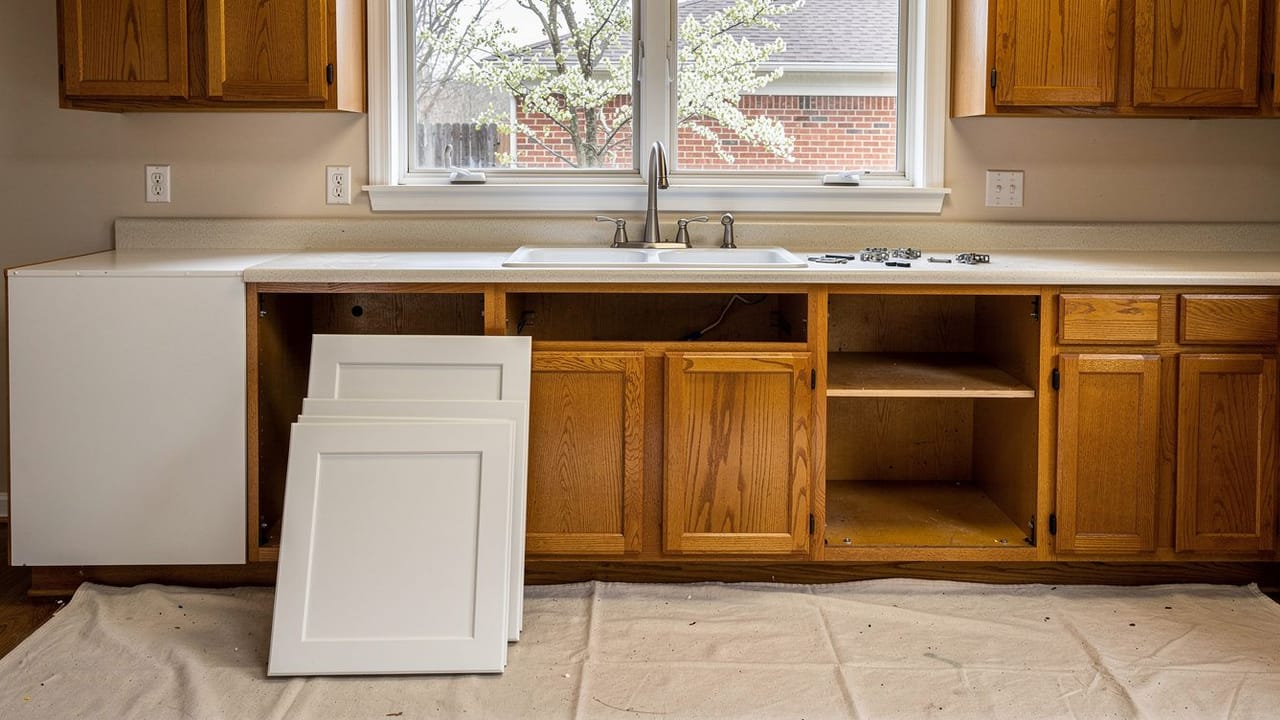
Refacing, as we do it, replaces doors, drawer fronts and the visible face frame surfaces while the boxes stay where they are. It is a legitimate route to a new-looking kitchen when the cabinetry underneath is sound and the layout works, and it is the work described on our cabinet refacing page. Whether it suits your kitchen comes down to the boxes.
When are the cabinet boxes worth keeping?
Solid plywood or good particleboard boxes, square and firmly fixed, with no water damage at the sink base and face frames in sound condition. Of those, dry counts for the most with particleboard. The Composite Panel Association’s technical bulletin on the dimensional stability of particleboard and MDF explains that once these panels have swelled past their original size from humidity or water, they do not fully recover when they dry out again.
And a layout you are happy with, because refacing changes appearance and not geometry.
When should cabinets be replaced instead?
Swollen or delaminating boxes, particularly under the sink where a slow leak has been. A swollen panel stays swollen, so we would replace those units rather than put new faces on them, and our post on repairing a water-damaged sink base goes through that repair on its own. Sagging shelves, racked carcasses, or a layout you dislike are the other reasons to start over.
Shelf sag and loose joints are what the cabinet standard itself looks for. In KCMA’s summary of its A161.1 certification tests, shelves and bottoms carry 15 pounds per square foot for seven days, and the cabinet has to show no excessive deflection and no joint separation. New doors hang on the same box, so a shelf that has already bowed stays bowed behind them.
Also when you want deep drawers instead of doors and shelves, which is a carcass change rather than a facing one.
- Boxes sound and square: reface
- Water damage at the sink base: replace those units at least
- Layout change wanted: replace
- Want drawers instead of shelves: replace
- Budget-led refresh, layout fine: reface
What does refacing include?
On our jobs it means new doors and drawer fronts, matching veneer or laminate over the face frames and exposed ends, new hinges and hardware, and usually new drawer boxes if the existing ones are tired. Not every company draws the line in the same place, so read what each quote lists.
Ask specifically about drawer boxes and soft-close hardware, since those are the parts your hands are on every day; our hardware and storage page covers the fittings. If you end up pricing new cabinets, ask whether the line is certified to A161.1. The same KCMA summary says certified doors are swung open and shut 25,000 times and drawers are run 25,000 times while loaded.
Painting as the third option
Painting the existing doors involves no new doors, fronts or veneer, and it still changes a good deal of what you see. It keeps the existing door style, which refacing does not. That work sits with our refinishing and painting service.
Where the door profile is dated rather than the color, refacing is the better answer; where the color is the problem, paint is. If you cannot tell which you have, ask us for a free estimate and we will open the doors and check the boxes before talking about either.
Sources
- Composite Panel Association, Dimensional Stability of Particleboard and Medium Density Fiberboard (MDF), Technical Bulletin — Particleboard and MDF that swell past their original dimensions from humidity or water do not fully recover on re-drying.
- Kitchen Cabinet Manufacturers Association, Cabinets Certified to Last (summary of ANSI/KCMA A161.1) — Shelves and bottoms loaded at 15 lb per sq ft for seven days, checked for deflection and joint separation; doors and drawers cycled 25,000 times.
FAQ
Refacing Cabinets or Replacing Them — questions
How much cheaper is refacing than replacing?
It depends on the kitchen, and we would not put a percentage on it without seeing the cabinets. Refacing keeps the boxes, so there is less to build and nothing to tear out, but the gap narrows if you also want new drawer boxes, soft-close hardware and internal fittings. Get a written quote for both on the same kitchen and compare them line by line.
Can I reface cabinets and change the layout?
No. Refacing keeps the boxes exactly where they are. If you want to move a run, change cabinet heights, or convert doors and shelves to deep drawers, that is replacement. Deciding whether the layout works is therefore the first question rather than the last.
Is refacing worth it on cheap builder cabinets?
It depends on the boxes rather than the badge. Particleboard carcasses that are square, solid and dry are ones we would consider refacing. What rules it out is water damage, sagging shelves or racked frames, which can happen to any cabinet that has been overloaded or wetted, and new doors fix none of them.
What are the problems with refacing kitchen cabinets?
Refacing changes how cabinets look, not what stands behind the doors. It cannot fix swollen or delaminating boxes, shelves that have already bowed or carcasses that have racked, and it keeps the layout exactly as it is, so moving a run or trading shelves for deep drawers means replacement. Companies also differ on what refacing includes.